Third-party SAM services offer thorough software asset management through key components: inventory tracking, compliance monitoring, vendor contract negotiations, security assessment, and customized reporting. These providers deliver measurable business value by eliminating unnecessary licenses, optimizing cloud resources, automating compliance tracking, and providing actionable insights via executive dashboards. Organizations benefit from cost savings, improved service quality, and reduced audit risks. The right provider combines industry expertise, specialized knowledge of complex licensing metrics, and proven discovery capabilities for both on-premises and SaaS environments.
The Core Components of Professional SAM Service Offerings

The foundation of any effective Software Asset Management (SAM) service rests on five essential components that work together to create a thorough management system.
At the center of these offerings is inventory management, which catalogs and tracks all software assets across the organization, providing visibility into usage patterns and potential risk areas.
Comprehensive inventory management illuminates your software landscape, revealing both usage realities and vulnerability hotspots.
Compliance management guarantees that all software usage adheres to vendor licensing agreements, preventing costly legal penalties and audit issues. This component typically includes regular compliance checks and remediation planning.
Additional core elements include vendor management for negotiating ideal contract terms, security monitoring to identify vulnerabilities in software assets, and custom reporting capabilities that deliver actionable insights to stakeholders. These services often provide expertise and guidance for businesses unfamiliar with complex registration and management requirements. These services often include periodic audits that systematically identify software licenses and their actual usage across the organization. This comprehensive approach helps eliminate risks associated with shadow IT and SaaS sprawl that can compromise organizational security.
These reports can highlight compliance status, cost-saving opportunities, and security risks, allowing organizations to make informed decisions about their software investments and management strategies.
How Third-Party SAM Services Deliver Measurable Business Value

While understanding the components of SAM services provides a structural view, organizations often seek concrete evidence of return on investment before committing to third-party solutions. The business value of SAM services materializes through multiple channels, particularly in cost savings and compliance benefits.
Third-party providers deliver measurable financial impact by eliminating redundant licenses and leveraging their purchasing power for volume discounts. Organizations typically see procurement waste decrease as centralized dashboards align purchasing with actual usage patterns. SAM outsourcing typically provides improved service quality rather than reduced overall costs. MSPs contribute their years of experience from various client environments to significantly enhance an organization’s SAM maturity faster than internal teams could achieve alone. As demonstrated in real-world scenarios, collaboration with external SAM experts has consistently led to more efficient asset tracking and optimized license usage across organizations of all sizes.
Cloud optimization alone can reduce spending by preventing resource overprovisioning.
Compliance benefits emerge through automated tracking of license metrics, which greatly reduces audit-related penalties. By maintaining publisher-favorable compliance postures, companies minimize audit triggers while standardizing entitlement records.
SAM services also strengthen executive decision-making through dashboards that quantify risk exposure and validate audit readiness, providing leadership with actionable insights for strategic planning.
Selecting the Right SAM Service Provider for Your Organization’s Needs
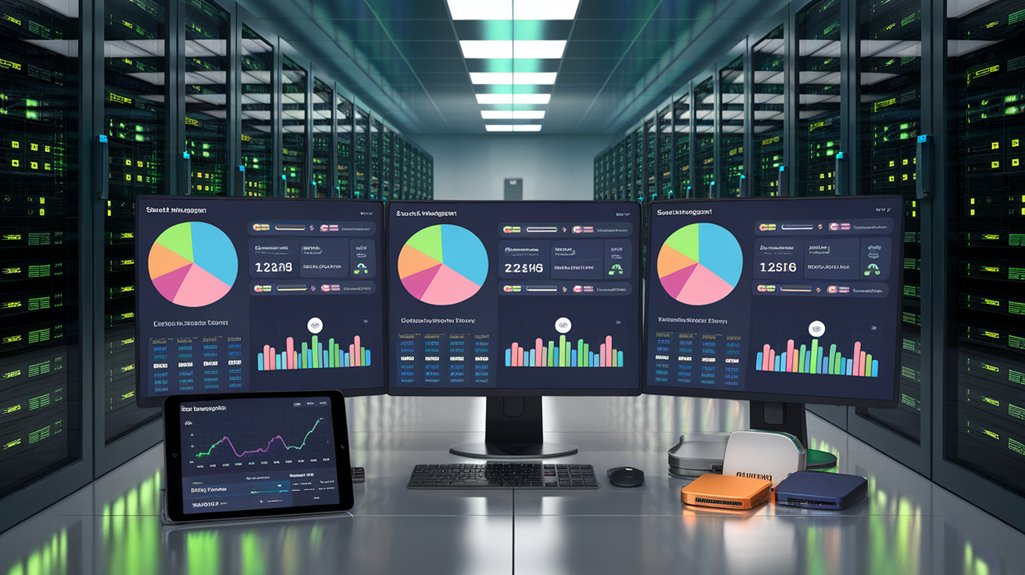
When organizations consider partnering with third-party SAM service providers, selecting the ideal match requires methodical evaluation against several critical criteria. Effective provider evaluation should assess expertise in industry standards like ISO/ITIL, while examining their ability to deliver service customization tailored to specific organizational requirements.
Companies should prioritize providers who demonstrate:
- Specialized knowledge of complex licensing metrics across key vendors like Microsoft, IBM, and Oracle
- Extensive discovery capabilities that cover both SaaS applications and on-premises assets
- Clear SLAs with transparent response times and performance guarantees
- Proven track records supported by client references and satisfaction metrics
The optimal provider will balance technical capabilities with business acumen, offering spend analytics that support vendor consolidation strategies while maintaining ethical independence from software sales interests. Look for providers who offer a comprehensive solution encompassing managed services that can be tailored to your organization’s specific SAM maturity level.
Their services should scale with organizational growth and adapt to evolving publisher requirements. The best providers will deliver robust portfolio management techniques allowing organizations to transition from managing individual applications to adopting holistic approaches when dealing with hundreds of software assets simultaneously. Understanding these offerings will help determine if your organization might benefit from the increased control and flexibility that comes with transitioning to a DIY SAM approach in the future.
Frequently Asked Questions
How Long Does Implementation of Third-Party SAM Services Typically Take?
The implementation timeline for third-party SAM services varies based on organizational complexity and scope. Typically, implementation ranges from several weeks to several months, depending on the size of the software estate and existing documentation quality.
Service readiness depends on successful completion of initial onboarding, which includes capturing entitlements and usage data. Many providers utilize a phased rollout approach to guarantee minimal disruption while establishing thorough software asset management processes and integration with existing systems.
Can SAM Services Integrate With Our Existing Cybersecurity Infrastructure?
Yes, SAM services can integrate with existing cybersecurity infrastructure. Organizations should evaluate potential integration challenges by examining API compatibility and data flow requirements.
Most enterprise SAM solutions provide connectors for common security tools, enabling vulnerability correlation with software inventory. Cybersecurity compatibility varies by vendor, with some offering pre-built integrations for SIEM systems, vulnerability scanners, and endpoint protection platforms.
Implementation typically requires IT security team involvement to configure proper data sharing protocols.
What Certifications Should SAM Service Provider Staff Possess?
Effective SAM providers should employ staff with specific certification requirements that demonstrate technical and compliance expertise.
Key staff qualifications include core SAM-specific certifications like IAITAM or ISO/IEC 19770-1 training, alongside industry credentials such as ITIL 4 or COBIT 2019.
Technical personnel should possess tool-specific certifications for platforms like Snow License Manager or ServiceNow, while compliance specialists need regulatory credentials relevant to the client’s industry requirements.
How Are Pricing Models Structured for Third-Party SAM Services?
Third-party SAM service providers typically structure their pricing through several approaches.
Flat-rate models offer predictable monthly fees regardless of organization size. Per-user pricing tiers scale costs based on managed endpoints or licenses. Value-based frameworks tie fees to demonstrated savings from optimization efforts.
Many providers implement hybrid subscription models combining fixed components with performance incentives. Organizations should evaluate which model aligns with their budget predictability needs and expected return on investment.
Do SAM Services Cover Open-Source Software Management?
Yes, SAM services typically cover open-source software management.
These services track open-source components within the software inventory, ensuring license compliance with GPL, AGPL, and other open-source requirements. They help organizations identify all deployed open-source solutions, manage associated risks, and maintain open source compliance documentation.
Most extensive SAM providers offer specialized tools to detect open-source dependencies within applications, ensuring companies can effectively manage these assets alongside commercial software.